
Far Out
The Bell Rang in Copenhagen
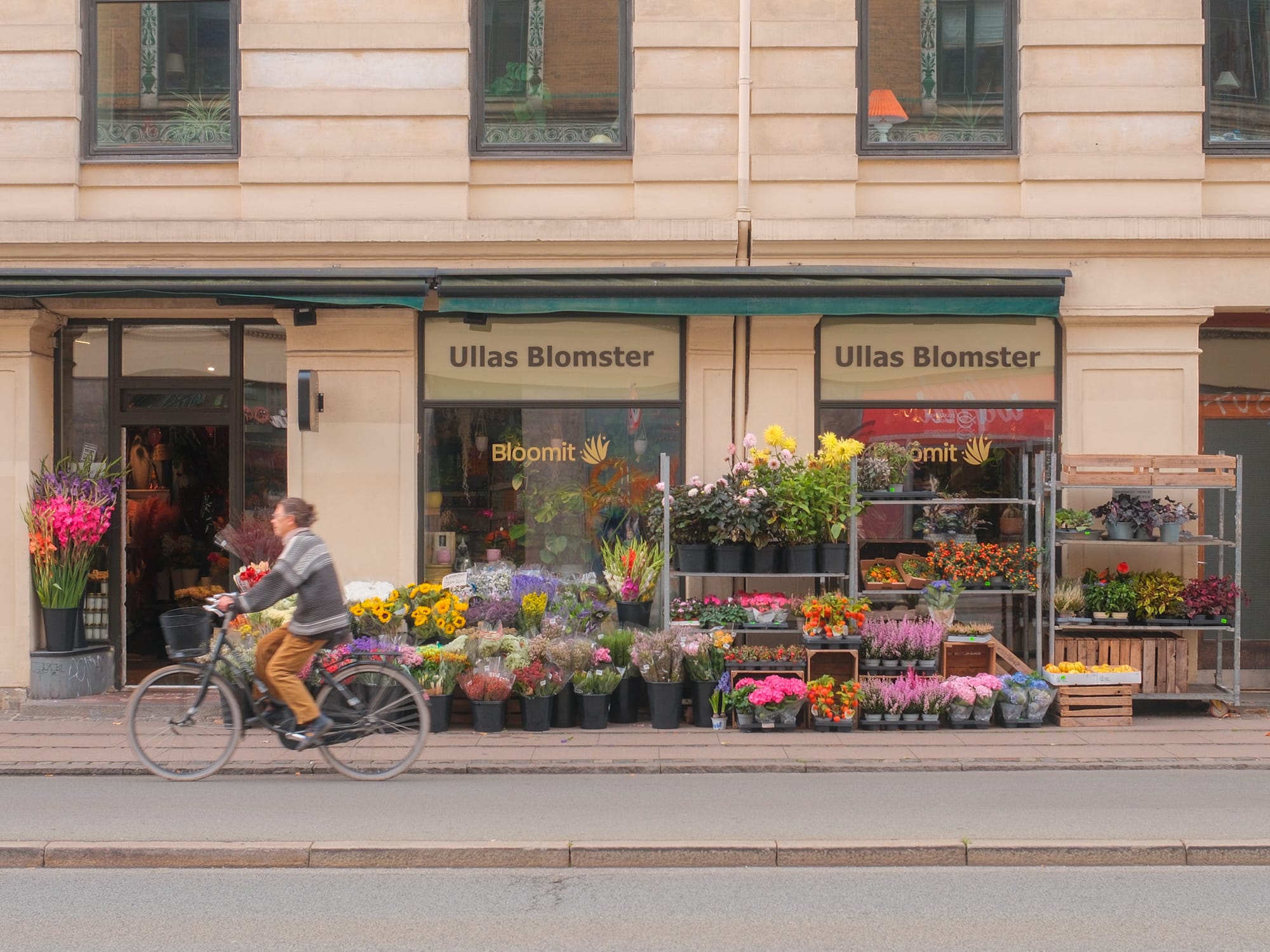
There is nothing more sacred in Copenhagen than the bicycle lane. It is something you learn early on the ground, often by force. For Grace and I, our humbling came a few days ago.
My wife exited a shop and took one step too many. Bells immediately began to rang. Voices began to shout what sounded like throat clearing but I am assuming were Danish words. Bystanders turned around and stared. The shop clerk stuck their face against the window and watched. My wife had set foot in the cycle lane, and traffic was coming. I grabbed her arm not a second too late as a line of people sped past our faces.
We had just arrived in Copenhagen, and Grace had just nearly been ran over by another passing member of the Spandex Mafia.
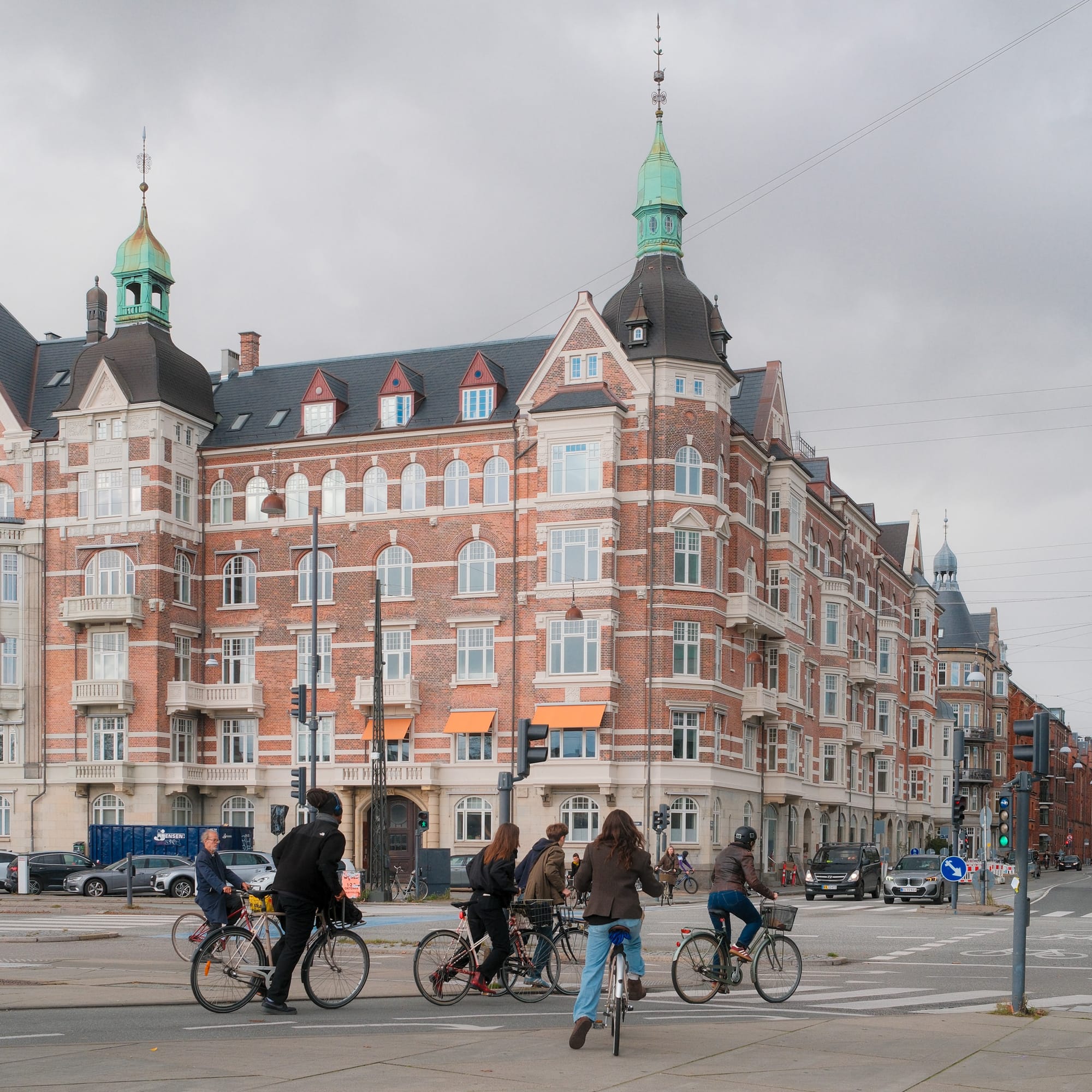
There was a rule once shared with me about travel: 'However long you want to spend somewhere, double it.' Well, Grace and I only talked of visiting Copenhagen for a weekend before we were to depart Europe. As it goes, though, we've been housesitting here for one (flu-ridden) week now, and have one more (healthy) week yet to go.
This city has been on the top of Grace's list to visit for a long time. In fact, it seems to be on the top of many peoples lists. Just yesterday, CapturedByZak began fizzing ('Brooo... I want to go there so bad!) when I told him that we were spending time here. Maybe it's on the top of yours.
It's no wonder why: Copenhagen holds an almost mystical status. I wasn't aware beforehand, but with my eyes now tuned, I notice article after article and social post after social post about how this place is 'The Cleanest City in Europe', or 'The #1 City You Should Move To'. But what sticks out most is how often you read that Copenhagen is The Most Livable City in the World.
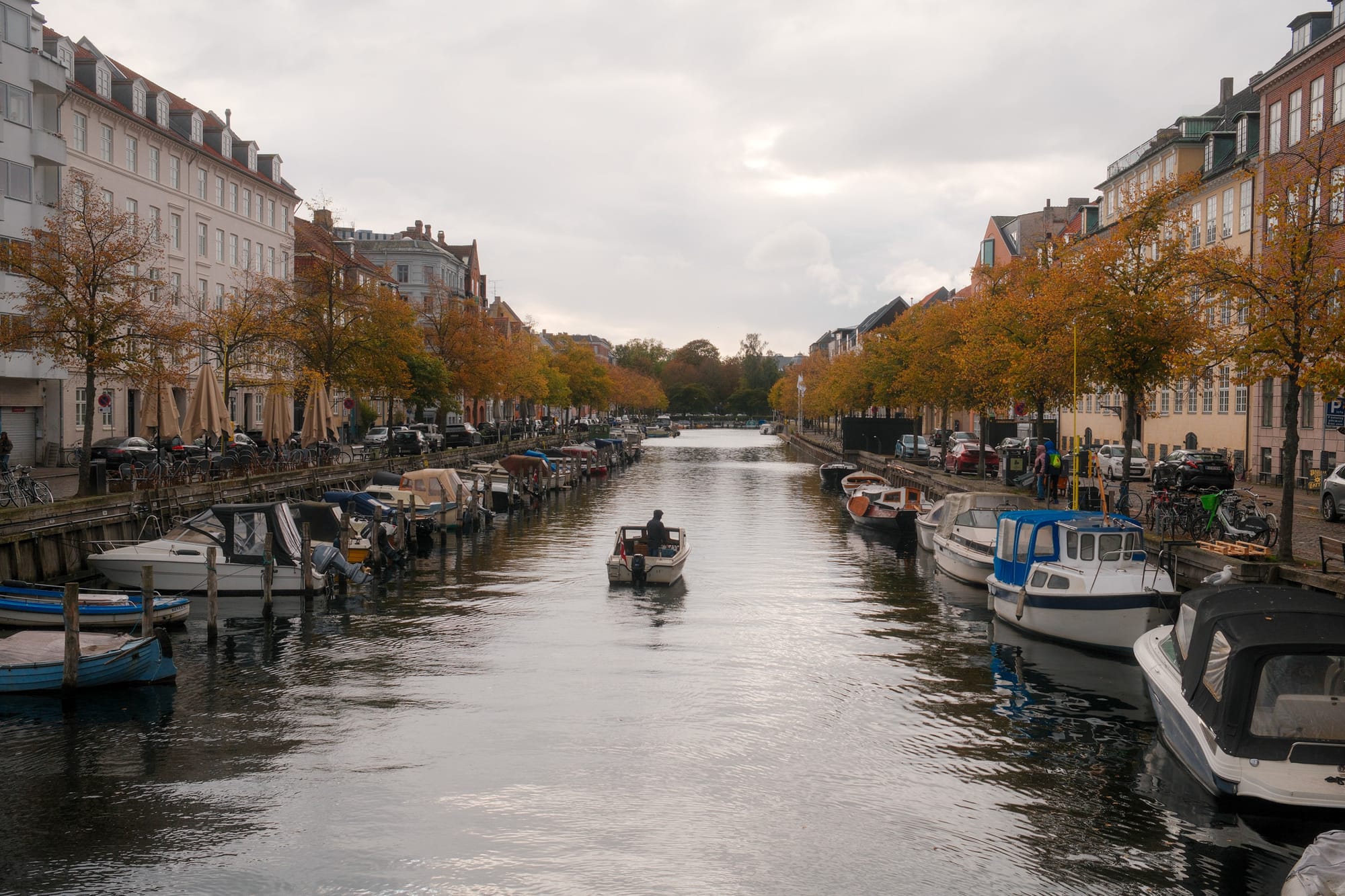
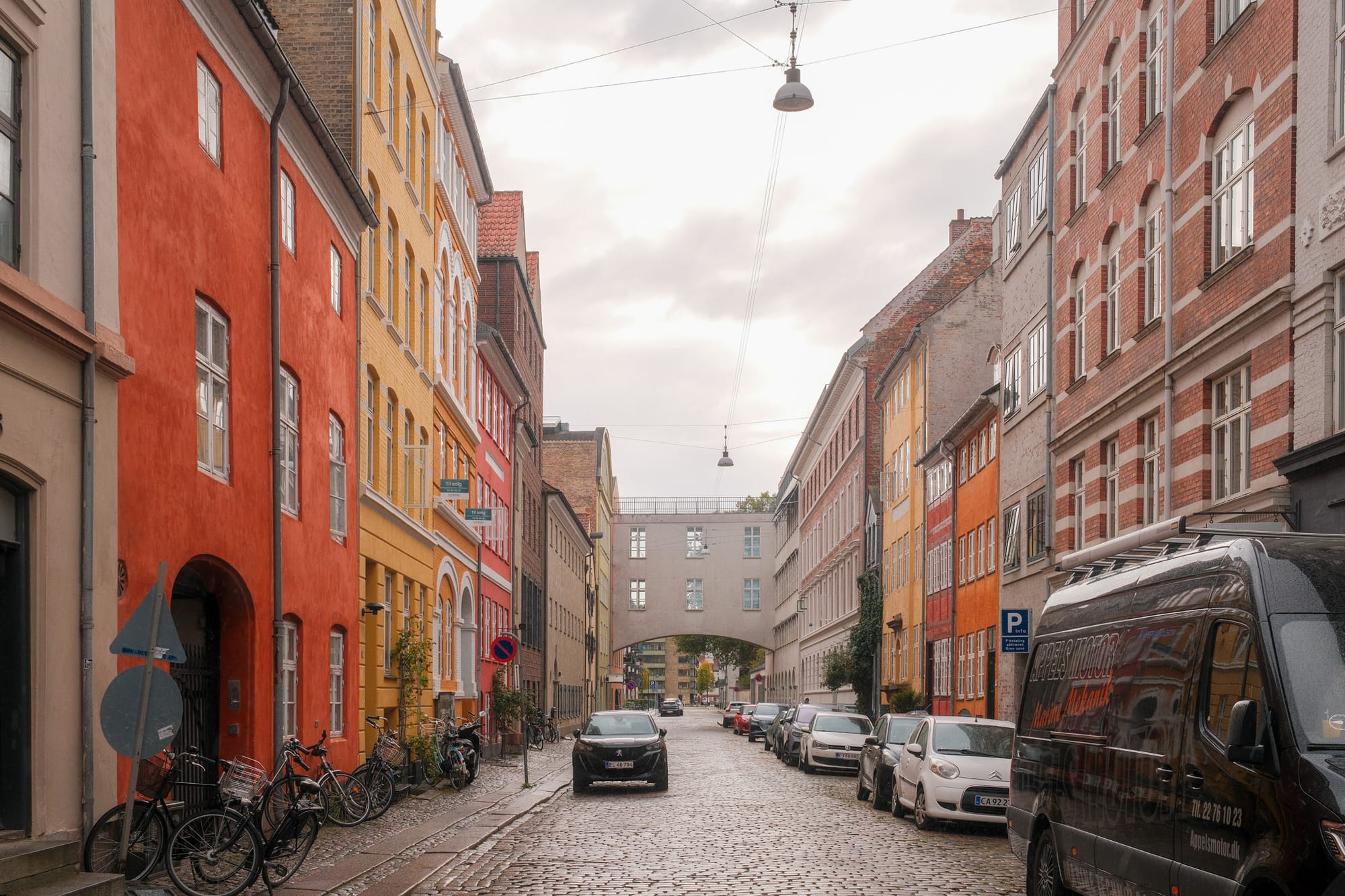
Most Livable City is a hell of a title, and I'm not even sure what it means. But I think I can see some signs: after waltzing through passport control, Grace and I stepped onto the metro into town. It was the cleanest train I have ever seen, and that was not a fluke: they all are. And they're huge, with massive, comfortable benches to sit on. When we arrived into the center of town, we walked across the same streets that the King of Denmark goes for his daily runs on. The roads have no cars, only bike lanes, and no litter. The parks are clean, and I have rarely felt so carelessly safe.
There's another universal note: everyone in Denmark rides a bike to work, it's true. But nobody uses bike locks. It's the most unbelievable thing to see 40 bikes sitting at a train station, unlocked, and nobody has stolen them. Even more shocking is where people leave babies: on roads, outside cafes, with strangers. You walk past what is reasonably assumed to be an empty stroller only to meet eyes with an infant in a sleeping bag.
Everybody here has impeccable fashion taste. Everybody here looks like a Disney prince or princess. Apparently the average salary is absurd too: everybody makes near $US80,000.
And homeless people – I have almost forgotten about them. Occasionally, you see one collecting aluminum cans out of the trash to recycle for a small earning. And they seem quite nice. But there are no tents or cardboard shacks on the sidewalk. There are no establishments temporarily (permanently) erected in the metro. And most often you do not see them at all.
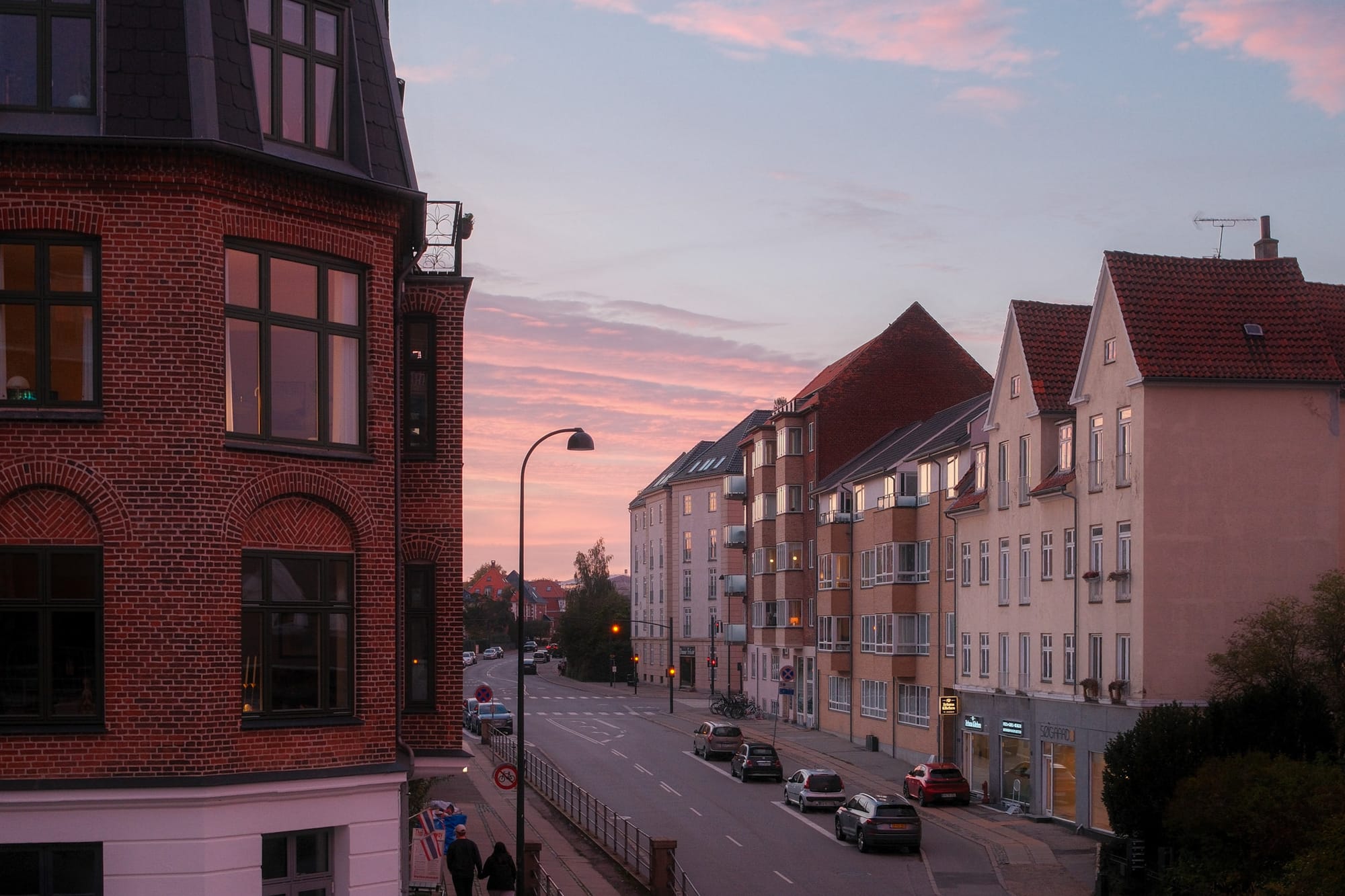
Yet that sort of thing is exactly why Grace and I both have felt as though something is missing in Copenhagen.
There was a time in my life when I was small: mentally, spiritually, if not physically. The world intimidated me. I was quiet and kept to myself, and I had a crippling fear of being judged. I remember most vividly pulling into a parking lot sitting in my dad's truck when he asked me to run into the store to get a can of tomatoes for dinner.
I couldn't. I was unbelievably scared to. The thought of doing so was enough to make my palms sweat. I was so paralyzed by the thought of someone watching me pick a can (or, God forbid, the incorrect can) of tomatoes or of the conversation I would have with the cashier. I was terrified that someone would look at me – I was certain they would – and I was terrified that they might think anything of me.
It took only one or two quite dramatic events to snap me out of that headspace. When my father got cancer and then my brother died shortly after, there was a reckoning: I was running out of time. That physical reality soon overwhelmed the mental one I was chained inside. There were things I wanted to still do with my dad, but his condition was rough. And there was one very particular thing I wanted to say to my brother, that I never would have the opportunity to: 'I love you.'
Yet it was those very moments, those very specific incidents, where I was forced into an uncomfortable place. I was forced to exist under conditions I certainly did not think I could live through, which led to me doing things that I could never imagine doing (such as writing), that led me to become a man I could never imagine becoming.
What contrasts, and enables, the beautiful things I have experienced are the terrible things opposite them. What makes me who I am is the imperfections, present and past, and the idiosyncrasies that surround me.
When I want a good conversation, I don't look for the person who seems perfect. I look for the one who has a limp in their step. And I make sure their hair is a bit rough, or, even better, they have none. And I'd prefer if they were slightly entertained by my presence.
I want someone with character, and I want someone with a soul. It is that – the things that tell me they retain their humanity – which shows me they are alive and have something worthwhile to say.
I like to think it is the same with me. The moments where I have found myself most present, most aware, and most alive, are not the finest looking. In fact, they're the ones I could look at with great sadness.
Yet those are simply evidence that I am in fact alive.
(Which is more than my brother can say.)
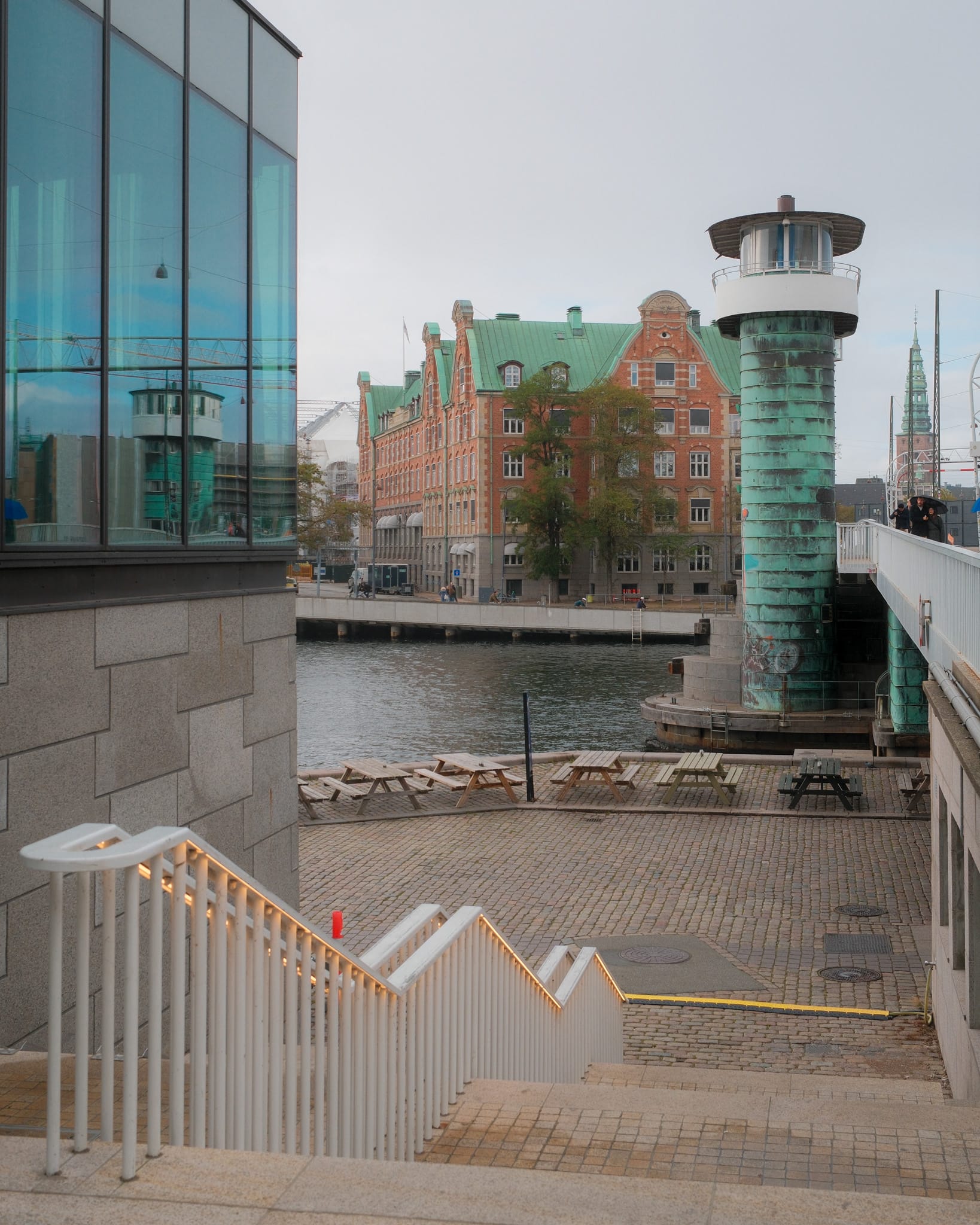
Copenhagen has been a pleasant city, and I look forward to seeing what this week will show me. But between the flu and the beauty I have struggled to find something (or someone) to write about.
Because what gives people their personality and places their humanity is the very thing that Copenhagen has so successfully stamped out: imperfection.